
How Robotics Can Prevent Drainage Crises During Monsoon Season
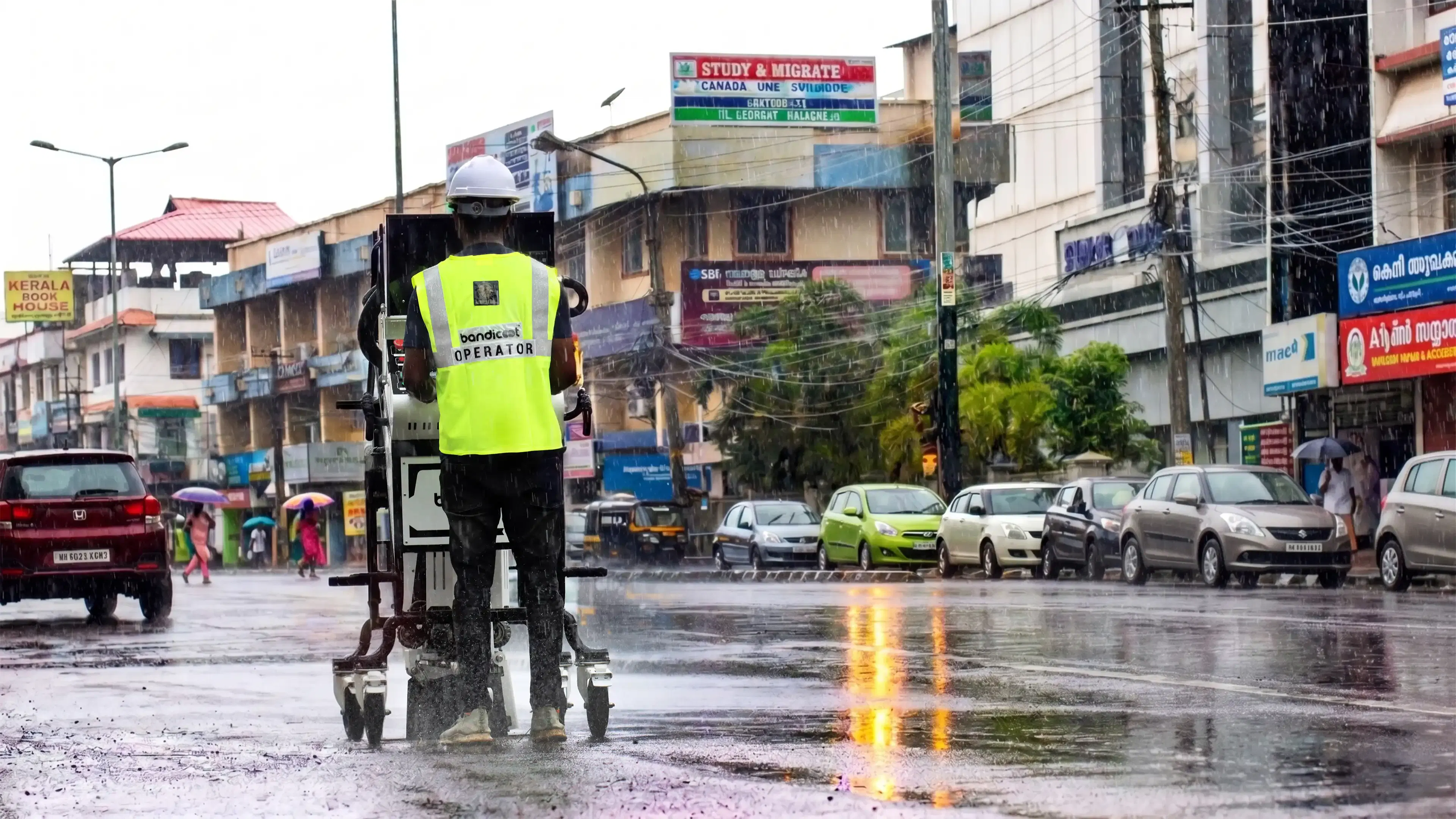
Understanding why urban India floods the way it does requires going underground, quite literally, and examining the state of the infrastructure we rarely think about until it stops working.
Every June, without fail, the same images flood the news. Commuters wading chest-deep through submerged streets. Cars half-buried under brown water. Families salvaging what little they can from waterlogged homes. The monsoon, people say, has been particularly bad this year. It always has been.
But here is what the news coverage rarely says plainly: a significant share of this suffering is not caused by the rain. It is caused by what lies beneath the streets, a network of drains, culverts, and stormwater channels that have been neglected, encroached upon, choked with plastic, and quietly failing for years. When the monsoon arrives, it does not create a crisis. It merely reveals one that already existed.
Understanding why urban India floods the way it does requires going underground, quite literally, and examining the state of the infrastructure we rarely think about until it stops working.
A System Built for a City That No Longer Exists
Most stormwater drainage networks in Indian cities were designed and laid in the mid-20th century. They were engineered for populations a fraction of today's size, for rainfall intensities drawn from historical averages that climate change has long since made obsolete, and for cities where open land still existed to absorb excess water naturally.
That world is gone. In its place stand cities of extraordinary density, where every square metre of soil that once absorbed rainwater has been replaced by concrete and asphalt. The National Institute of Urban Affairs (NIUA) has documented that most Indian cities operate without a stormwater master plan altogether, and those that do have one are working from blueprints that predate current population densities by several decades. The World Bank's Urbanisation Review for India (2020) projects India's urban population will reach 600 million by 2031. The drainage pipes beneath our streets were not designed for anything close to that number.
The result is a baseline deficit — a system that is, even under ideal conditions, undersized for the city it serves. What blockages do is take a system already operating at the edge of its capacity and push it over.
What Is Actually Choking the Drains
Walk along any Indian city's open drains in April or May, before the rains come, and the picture is not subtle. Plastic bags, food wrappers, polystyrene containers, construction rubble, and decomposing organic matter accumulate in layers — deposited there throughout the dry season by a combination of inadequate waste collection and the deeply entrenched habit of treating open drains as an extension of the rubbish bin.
This is not a minor aesthetic problem. Research published in the Journal of Environmental Management (Elsevier, 2021) found that a single plastic carry bag lodged at a drain inlet can reduce effective water flow by 35 to 45 percent. The Central Pollution Control Board (CPCB) estimated that India generates approximately 3.5 million tonnes of plastic waste annually, a substantial fraction of which ends up in drainage networks, not because Indians are uniquely careless, but because waste collection infrastructure in most cities is simply unable to keep pace with the volume generated.
Beneath the visible debris lies a second, less obvious problem: silt. Fine particles, construction dust, topsoil carried by wind, organic sediment, settle into drains continuously throughout the dry season. The Centre for Science and Environment (CSE) has found that many urban drains in Indian cities are operating at 40 to 60 percent of their designed capacity by the time the monsoon begins, simply because they have never been properly cleared. The drain is still there. It just cannot carry what it was designed to carry.
Then there is the most structurally damaging cause of all — one that cannot be fixed with a cleaning crew. Over three decades of rapid, often unplanned urban expansion, natural drainage channels and floodplains across Indian cities have been progressively encroached upon by construction. A study by IIT Bombay on Mumbai's drainage found that the effective width of several major natural channels had been reduced by 60 to 80 percent through encroachment. These were not small, incidental waterways. They were the channels the city depended on to move large volumes of stormwater safely to the sea. Narrowed to a fraction of their original width, they cannot perform that function anymore.
When the Rains Come: How One Blocked Drain Becomes a City's Crisis
What makes drain failure during the monsoon so dangerous is not just the local consequence of any individual blockage. It is how rapidly a problem at one point in the network becomes a problem everywhere.
Urban drainage systems are hydraulically connected. When a critical junction blocks and water cannot flow forward, it has nowhere to go but back and outward. Pressure builds upstream. Adjacent drains, already at or near capacity, begin to overflow. The failure propagates through the network like a pressure wave, and what began as a localised obstruction becomes a city-wide inundation within hours.
In the first two hours of heavy rainfall over a blocked catchment, low-lying streets and underpasses submerge. This is the phase that makes the news — the dramatic visuals of flooded intersections and stranded vehicles. But this is also, in many ways, the least harmful phase. It is what follows that causes the deeper damage.
As flooding persists, drain backflow begins to force raw sewage up through manholes and into the same water that is now entering homes. The National Vector Borne Disease Control Programme (NVBDCP) data shows a consistent 3 to 5-fold increase in dengue cases in the 3 to 4 weeks following major urban flood events. Cholera, typhoid, and leptospirosis — a bacterial infection spread through contact with floodwater contaminated by animal urine — follow in the days and weeks after the water recedes. The flood you see on the news is over in 24 hours. The public health crisis it triggers runs for a month.
Meanwhile, the economic consequences accumulate at every level. Businesses close. Daily wage workers, who have no paid leave, no insurance, and no savings buffer, lose income for every day the city is non-functional. Supply chains break down. The National Disaster Management Authority (NDMA) estimates that India loses approximately ₹23,000 crore annually to flood-related damage. The World Resources Institute (WRI) India has ranked cities like Mumbai, Chennai, and Kolkata among the highest globally for annual expected economic losses from flooding as a proportion of urban GDP.
None of these numbers are abstractions. Behind each one are families whose homes were damaged beyond repair, small businesses that did not reopen, and children whose school year was disrupted in ways that compound quietly for years.
The People Who Pay the Highest Price
Flood damage is not distributed evenly across a city. It concentrates, with brutal consistency, on those least equipped to absorb it.
Residents of informal settlements bear the greatest physical exposure. Their homes are frequently built on low-lying land and in drainage corridors precisely the areas that development has encroached upon and that flood first and drain last. The Indian Institute for Human Settlements (IIHS) has documented that informal settlement residents face disproportionate asset losses from flooding, compounded by an almost total absence of formal insurance and post-disaster support mechanisms.
Daily wage earners construction workers, street vendors, domestic workers, auto-rickshaw drivers lose income for every day the city is paralysed, with no mechanism to recover it. Women shoulder a disproportionate burden of the domestic crisis that flooding creates: managing household water procurement when supply is contaminated, caring for sick children, navigating disrupted markets. The Comptroller and Auditor General (CAG) of India has noted in multiple state-level audits that drain maintenance funds are frequently allocated but incompletely utilised meaning the resources exist to reduce this suffering, but the institutional follow-through does not.
Why This Keeps Happening, Year After Year
If the causes are this well understood and the consequences this severe, the natural question is why nothing substantively changes. The answer is uncomfortable but important.
Drain maintenance is unglamorous work. It generates no ribbon-cutting photographs, attracts no positive media coverage, and delivers no electoral benefit to the officials who fund it. Political accountability for drainage failure is diffuse: no single person is held responsible when a drain blocks and a neighbourhood floods. Responsibility is spread across municipal departments, state agencies, and contracted vendors in a way that allows each to credibly point to the others.
At the individual level, littering the behaviour most directly responsible for drain blockages is normalised in ways that have proven stubbornly resistant to enforcement-only approaches. Changing it requires a simultaneous improvement in waste collection infrastructure and a sustained shift in public culture, neither of which happens quickly or cheaply.
And then there is climate change, which is progressively narrowing the margin for error. Rainfall patterns across the subcontinent are becoming more erratic, with extreme cloudburst events delivering a month's rainfall in a matter of hours becoming more frequent. The Indian Meteorological Department (IMD) has documented a measurable increase in high-intensity, short-duration rainfall events over Indian cities over the past two decades. Drainage infrastructure designed for historical rainfall averages is increasingly overwhelmed by events that fall entirely outside those parameters.
What the Evidence Says Works
The case for pessimism is real, but it is not the whole story. Across India, cities and researchers have documented interventions that work not as permanent solutions, but as meaningful reductions in preventable harm.
Systematic pre-monsoon desilting is the highest-impact, lowest-complexity intervention available to any municipality. A comparative analysis by NIUA found that cities implementing structured drain-cleaning programmes 6 to 8 weeks before monsoon onset recorded 30 to 50 percent fewer significant flooding incidents than comparable cities that did not. Surat Municipal Corporation is frequently cited as a benchmark: its ward-level pre-monsoon maintenance programme, consistently executed over successive years, is a meaningful contributor to the city's relatively strong flood management record compared to peers of similar size and rainfall exposure.
Technology-assisted early warning is increasingly affordable. Pilot programmes run by IIT Madras in partnership with the Greater Chennai Corporation demonstrated that IoT-based water level sensors at critical drainage junctions enabled maintenance teams to intervene before blockages propagated, reducing response times from hours to minutes. The Smart Cities Mission has funded drainage monitoring infrastructure across 100 cities, though implementation has been uneven.
Community engagement in pre-monsoon waste management has produced measurable results where it has been genuinely implemented rather than merely announced. The Pune Municipal Corporation's ward-level drain-inlet clearance programme, run in partnership with resident welfare associations, documented a 40 percent reduction in inlet obstruction complaints in participating wards over two consecutive monsoon seasons.
Green and nature-based infrastructure offers a longer horizon but a fundamentally important one. The UNEP's 2021 report on Nature-Based Solutions for Urban Flood Risk found that interventions including permeable pavements, urban wetland restoration, and vegetated drainage swales can reduce peak stormwater runoff by 20 to 40 percent in urban catchments significantly easing the load on ageing grey infrastructure. Chennai's ongoing Pallikaranai marshland restoration, imperfect and incomplete as it remains, is among the more serious attempts in India to recover natural drainage function at city scale.
None of these interventions, individually or collectively, eliminate the problem. The infrastructure deficit is real, and closing it requires long-term capital investment that cannot be wished away. But the gap between what Indian cities currently do and what the evidence suggests they could do at existing budget levels, with existing institutional capacity is large enough that significant improvement is achievable before the next monsoon season begins.
The Dry Season Is When the Work Happens
The monsoon is not the enemy. It is the source of water that fills reservoirs, recharges aquifers, sustains agriculture, and keeps a subcontinent alive. The crisis is not the rain it is the accumulated consequence of decisions made, or not made, in the months before the rain arrives.
A drain cleaned in April does not make headlines. But it keeps a street from flooding in July. It keeps sewage out of a family's home. It keeps a child from contracting leptospirosis. It keeps a daily wage worker earning through the season. These are not small things. They are, in aggregate, the difference between a monsoon that is merely wet and one that is a disaster.
The evidence, the solutions, and in most cases the funding already exist. What remains is the institutional will to act on them and to act now, while the skies are still clear.
Related Blogs
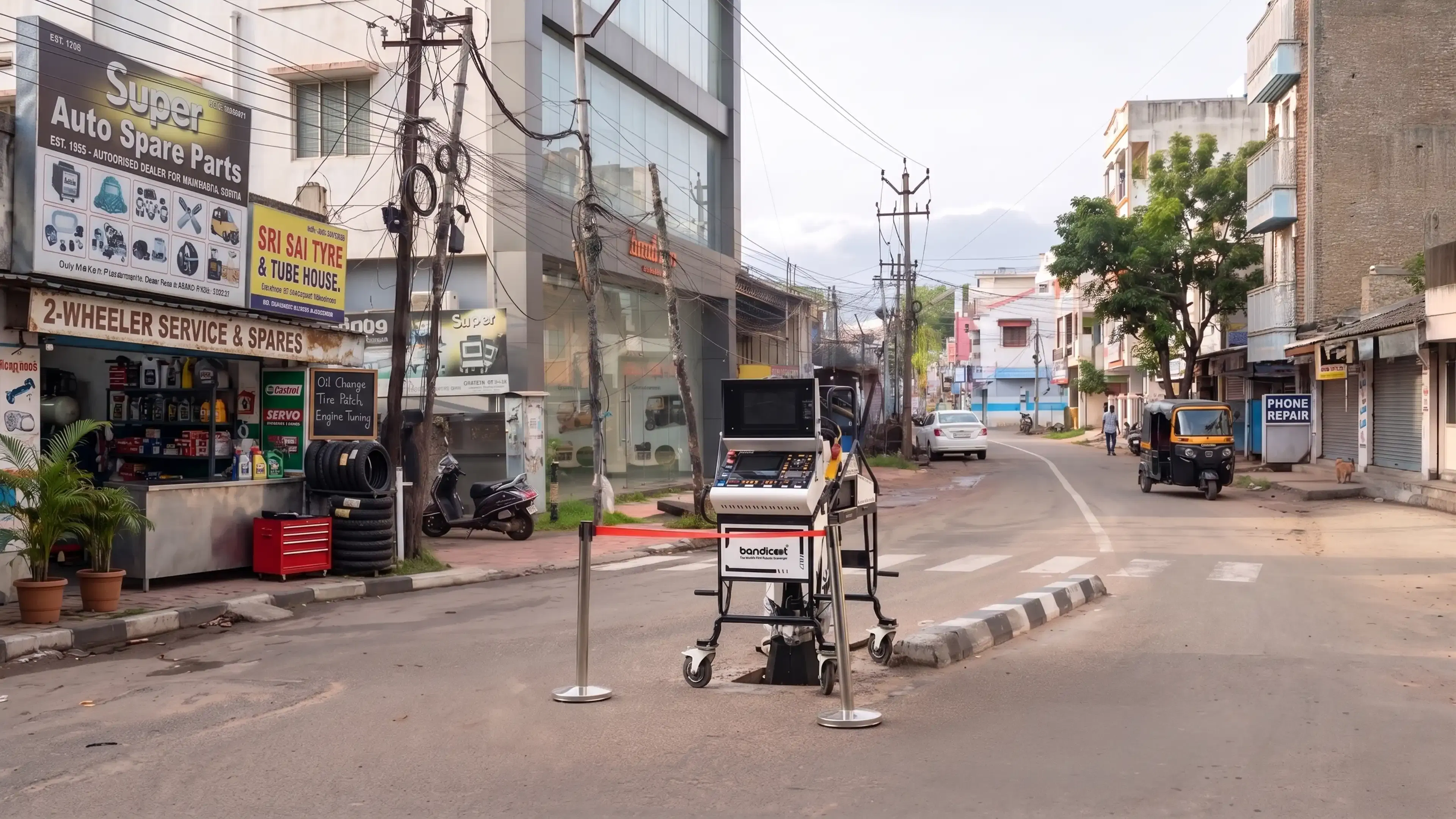
Can India Become a Global Robotics Leader?
A decade ago, the idea of robots cleaning sewers, assisting rehabilitation therapy, monitoring urban infrastructure, or supporting public healthcare systems in India would have sounded futuristic. Today, some of these technologies are no longer concepts confined to laboratories or global tech conferences. They are entering Indian streets, hospitals, municipalities, and industrial ecosystems in real and measurable ways.

Extreme Environment Robotics in India Explained
When we think about robotics, we often picture controlled environments and predictable systems. But in India, robotics is evolving in places that are anything but controlled.
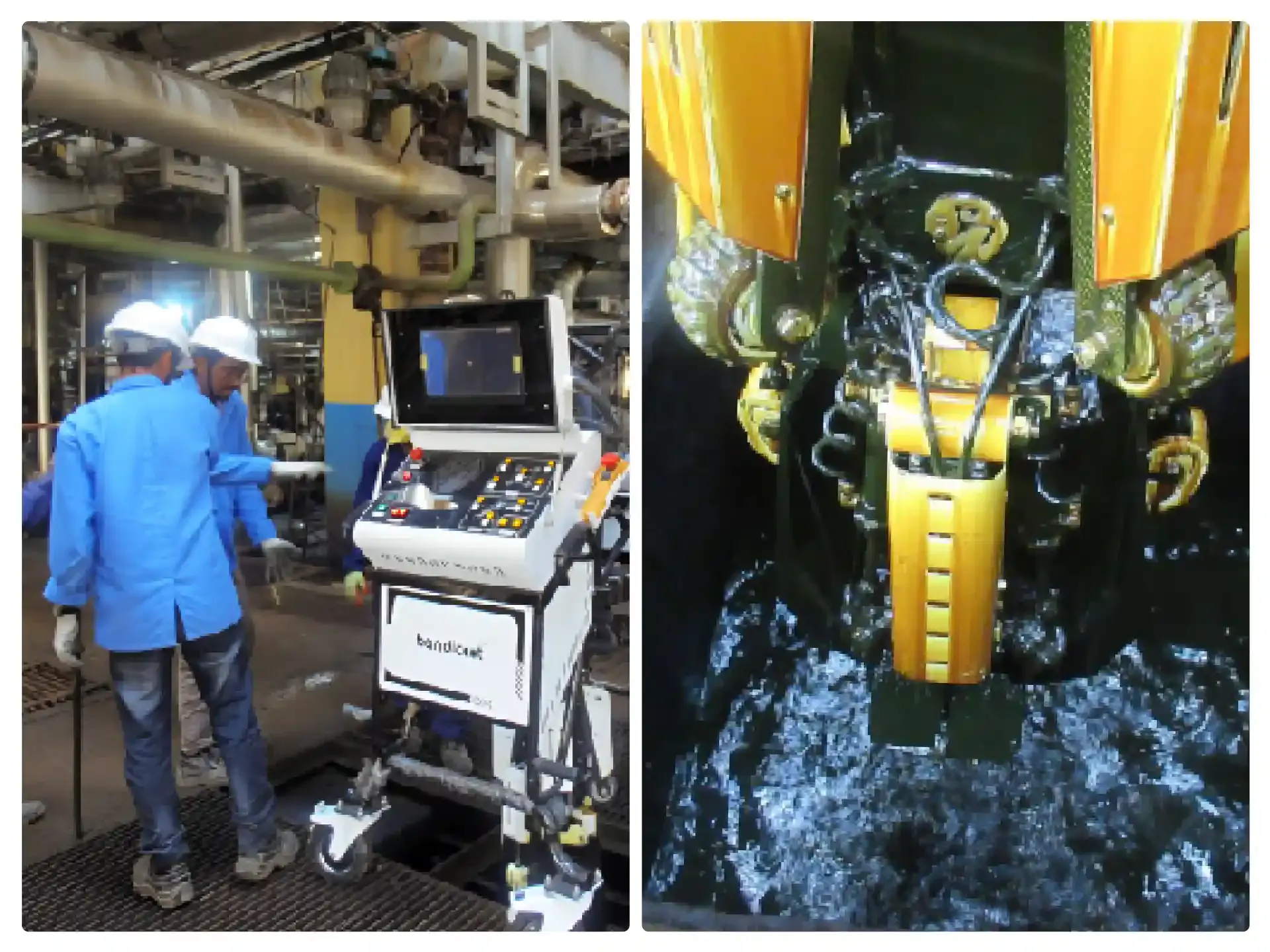
Industrial Robotics Shaping Infrastructure and Safety
Industrial infrastructure across the world is facing unprecedented pressure. Rapid urbanization, aging public assets, climate volatility, and rising safety standards are forcing governments and industries to rethink how infrastructure is managed. One technology is emerging at the center of this transformation: industrial robotics.