
Can India Become a Global Robotics Leader?
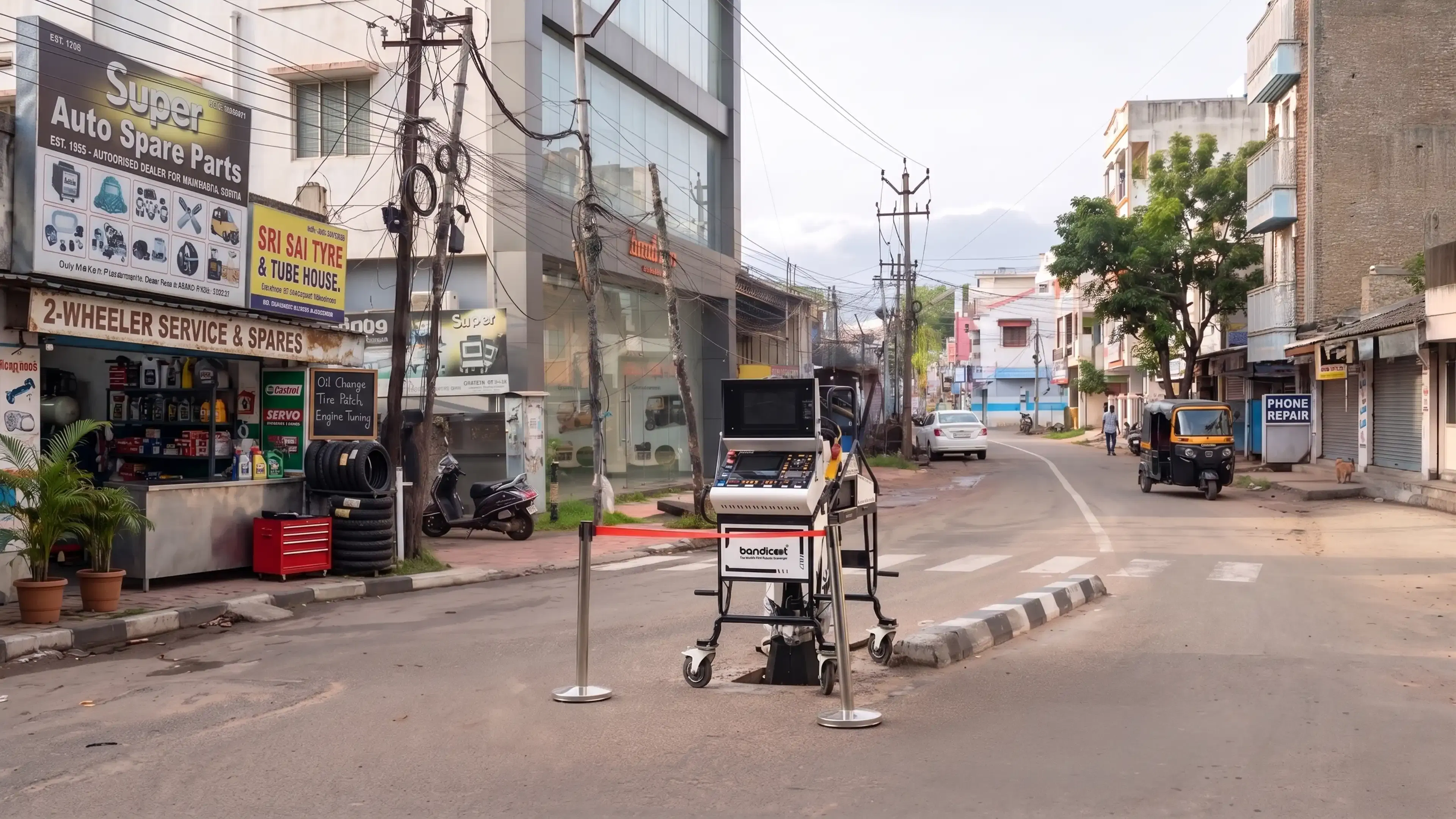
A decade ago, the idea of robots cleaning sewers, assisting rehabilitation therapy, monitoring urban infrastructure, or supporting public healthcare systems in India would have sounded futuristic. Today, some of these technologies are no longer concepts confined to laboratories or global tech conferences. They are entering Indian streets, hospitals, municipalities, and industrial ecosystems in real and measurable ways.
A decade ago, the idea of robots cleaning sewers, assisting rehabilitation therapy, monitoring urban infrastructure, or supporting public healthcare systems in India would have sounded futuristic. Today, some of these technologies are no longer concepts confined to laboratories or global tech conferences. They are entering Indian streets, hospitals, municipalities, and industrial ecosystems in real and measurable ways.
The larger question, therefore, is no longer whether robotics will become part of India’s future.
The real question is whether India can shape the future of robotics itself.
Over the last decade, India has demonstrated an unusual capability in the global technology landscape: the ability to build population-scale public technology systems in a resource-constrained environment. From Aadhaar and UPI to digital health infrastructure and space missions, the country has repeatedly shown that large-scale technological transformation is possible even within complex developmental conditions.
Robotics may now represent the next frontier of that transformation.
Globally, robotics is increasingly becoming more than an industrial automation sector. It is emerging as a strategic pillar of economic competitiveness, public infrastructure, healthcare modernization, labour safety, and national technological capability. Countries such as Japan, China, South Korea, and the United States have spent decades building robotics ecosystems across manufacturing, defence, logistics, and medical technology.
Yet India’s robotics journey may evolve very differently from theirs.
Its most significant breakthroughs may emerge not only from factories or industrial corridors, but from solving public infrastructure and social challenges at a scale few countries have ever faced.
That distinction could define India’s global relevance in robotics over the coming decades.
Beyond Automation: What Public Technology Leadership in Robotics Really Means
When most people think of robotics, they imagine industrial robotic arms inside manufacturing facilities. But public technology leadership in robotics extends far beyond industrial automation.
It refers to a nation’s ability to develop and deploy robotics systems that create broad societal impact.
In India’s case, this includes:
- Sanitation and hazardous environment management
- Public healthcare systems
- Smart urban infrastructure
- Disaster response operations
- Agricultural productivity
- Infrastructure maintenance
- Public safety technologies
- Accessibility and rehabilitation systems
This is where India’s robotics story becomes particularly interesting.
Unlike many advanced economies that built robotics ecosystems primarily around industrial efficiency, India’s greatest opportunity may lie in building socially impactful and affordable robotics solutions for large-scale public use.
That shift changes the conversation entirely.
The future of robotics in India may not be defined only by how efficiently machines replace labour. It may be defined by how effectively technology protects human life, improves public systems, and enhances dignity at scale.
Why Robotics Has Suddenly Become Strategically Important
Around the world, robotics is no longer treated as a niche technological sector. It is increasingly viewed as a geopolitical and economic capability.
The reason is simple: robotics sits at the intersection of artificial intelligence, automation, data systems, advanced sensors, and machine learning. Countries investing heavily in robotics are ultimately investing in future economic resilience and strategic competitiveness.
According to the International Federation of Robotics (IFR), global robot installations have continued to grow steadily, with Asia accounting for the largest share of deployments. Manufacturing giants are accelerating automation, healthcare systems are integrating robotic technologies, and governments are beginning to rethink infrastructure management through intelligent systems.
But India’s robotics urgency is driven by something deeper than industrial competition alone.
India faces challenges that are uniquely large in scale:
- Rapid urbanisation
- Expanding infrastructure demands
- Healthcare accessibility gaps
- Labour-intensive sectors
- Hazardous sanitation work
- Agricultural productivity pressures
These realities create conditions where robotics becomes not merely an innovation sector, but a developmental necessity.
And this is precisely where India’s path begins to diverge from traditional robotics powers.
India’s Greatest Strength May Not Be Manufacturing Alone
India may not currently possess the manufacturing scale of China or the industrial robotics legacy of Japan. However, it possesses something equally significant: the ability to build scalable technology systems under real-world complexity.
That capability matters more than many realise.
Digital Public Infrastructure as a Foundation
India’s experience with digital public infrastructure has already drawn global attention.
Systems such as Aadhaar, UPI, Digital India, and digital governance platforms demonstrated that India can build interoperable, population-scale technology ecosystems at relatively low cost.
The significance of this experience is often underestimated.
Robotics ecosystems do not operate in isolation. They increasingly depend on digital infrastructure, AI integration, cloud systems, real-time data environments, and public technology interoperability.
India already possesses many of these foundational layers.
That creates a powerful base for future robotics deployment across healthcare, municipalities, transportation systems, and urban governance.
A Massive Technical Talent Ecosystem
India also produces one of the world’s largest pools of engineers, developers, and technical professionals every year.
As robotics becomes increasingly software-driven through AI, machine vision, and intelligent automation, India’s software strength becomes a major strategic advantage.
But talent alone is not the story.
The more important shift is that Indian engineering ecosystems are slowly moving from service-oriented technology work toward deep-tech innovation.
That transition could become historically important.
The Rise of India’s Deep-Tech Startups
For years, India’s startup ecosystem was largely associated with consumer internet platforms and digital services.
That is beginning to change.
Across sectors such as healthcare robotics, industrial automation, mobility systems, rehabilitation technologies, and sanitation robotics, Indian deep-tech startups are increasingly solving real-world deployment challenges.
And unlike many global robotics ecosystems that evolved around industrial luxury, Indian robotics innovation is often forced to operate within constraints of affordability, infrastructure limitations, and public-scale deployment.
Ironically, those constraints may become India’s greatest innovation advantage.
Where India’s Robotics Story Becomes Different
If there is one sector that reveals the true social significance of robotics in India, it is sanitation.
For decades, sanitation workers across the country have entered toxic underground sewer environments despite legal prohibitions against hazardous manual scavenging. The issue has never been merely technological. It has also been tied to public health, worker dignity, social inequality, and urban governance failure.
Robotics changes that conversation fundamentally.
What enters the sewer is no longer a human being, but a machine designed to remove human exposure from life-threatening environments altogether.
This is where Indian robotics innovation acquires moral and developmental significance.
Indian robotics companies such as Genrobotics have demonstrated how robotic sewer-cleaning systems can transform sanitation infrastructure while improving worker safety and dignity.
These deployments are important not simply because they automate tasks.
They matter because they show how robotics can intersect with public welfare, ethics, and social transformation simultaneously.
In many ways, this represents a distinctly Indian robotics model, one rooted not only in efficiency, but in human-centred innovation.
And that distinction could become globally influential.
Healthcare Could Become the Next Major Frontier
If sanitation reveals the ethical importance of robotics, healthcare reveals its developmental significance.
India’s healthcare system continues to face structural pressures related to accessibility, uneven specialist distribution, and rising patient loads. In many semi-urban and underserved regions, advanced medical infrastructure remains limited.
Robotics could help bridge some of these gaps.
Medical robotics is already evolving globally across:
- Robotic-assisted rehabilitation
- AI-supported diagnostics
- Surgical assistance technologies
- Elderly care systems
- Remote healthcare intervention
- Smart rehabilitation devices
As India expands digital healthcare infrastructure, robotics integrated with AI and telemedicine may become increasingly important in strengthening tertiary care systems.
The implications are larger than they initially appear.
Healthcare robotics is not merely about sophisticated machines inside advanced hospitals. In the Indian context, it could become part of a broader effort to democratise healthcare accessibility itself.
That possibility carries enormous long-term significance.
India’s Robotics Opportunity Extends Beyond Cities
Much of the global robotics conversation revolves around industrial automation and smart cities. But India’s long-term robotics opportunity may extend equally into agriculture and rural infrastructure.
Agriculture continues to employ a large section of India’s population while facing persistent productivity and resource-efficiency challenges.
This creates space for robotics systems focused on:
- Precision farming
- Crop monitoring
- Soil analysis
- Automated spraying systems
- Resource optimisation
Affordable agricultural robotics could improve productivity while reducing operational inefficiencies for farmers.
Once again, India’s comparative advantage may emerge not through ultra-premium robotics systems, but through scalable and cost-effective innovation designed for real-world deployment conditions.
That pattern appears repeatedly across India’s technology journey.
Why India’s Robotics Path Is Fundamentally Different
Japan built robotics leadership through industrial precision.
China scaled robotics through manufacturing dominance.
The United States accelerated robotics through AI leadership and defence innovation.
India’s robotics identity, however, may emerge through public-impact innovation.
That distinction matters because the future global demand for robotics will not come only from advanced industrial economies. Developing nations across Asia, Africa, and Latin America face many of the same structural challenges India faces today: sanitation management, healthcare accessibility, infrastructure monitoring, and labour-intensive public systems.
If India succeeds in building affordable and scalable robotics ecosystems for these challenges, it could create a globally relevant development model.
In that sense, India’s robotics future may be less about copying existing powers and more about creating a new category altogether.
The Structural Challenges India Still Cannot Ignore
Despite its potential, India still faces serious structural limitations.
And these challenges will determine whether the country merely participates in robotics growth or genuinely leads it.
Manufacturing Dependence
India remains heavily dependent on imported robotics components such as advanced sensors, semiconductor systems, precision hardware, and actuators.
Without strengthening indigenous hardware ecosystems, long-term competitiveness may remain constrained.
Limited Research Investment
Compared to countries such as China, Japan, South Korea, and the United States, India’s robotics-focused research investment remains relatively modest.
Sustained progress will require stronger collaboration between:
- Universities
- Research institutions
- Industry ecosystems
- Public policy bodies
Skill and Workforce Transition
Robotics demands interdisciplinary expertise spanning AI, electronics, embedded systems, mechanical engineering, and human-machine interaction.
India’s education and technical training ecosystems will need to evolve rapidly to meet these future requirements.
Ethical and Policy Frameworks
As robotics becomes integrated into public systems, governance questions will become increasingly important.
India will eventually need robust frameworks related to:
- Ethical automation
- AI governance
- Worker transition
- Safety standards
- Data governance
- Public deployment policies
Because robotics at scale is never only about technology.
It is also about governance.
What India Must Do Next
India’s robotics future cannot be driven by startups alone. It will require long-term coordination between government, industry, academia, and public institutions.
Several priorities are becoming increasingly clear.
Increase Public Investment in Robotics
Robotics research, testing infrastructure, innovation grants, and deep-tech incubation require sustained institutional support.
Build Indigenous Hardware Ecosystems
Semiconductor manufacturing, advanced electronics, and robotics hardware systems will become strategically critical over the coming decade.
Expand Public Sector Deployments
Large-scale implementation across healthcare, railways, sanitation, municipalities, and infrastructure systems can accelerate ecosystem maturity.
Strengthen Industry-Academia Collaboration
Closer collaboration between universities and industries is essential for commercialising robotics research and developing future-ready talent.
Prioritise Human-Centred Innovation
India’s robotics growth model must remain rooted in affordability, accessibility, worker welfare, and social impact.
That approach may ultimately become India’s greatest global differentiator.
Conclusion
India’s robotics journey is not simply about automation, machines, or industrial modernisation.
At its core, it is about how technology can reshape public life at population scale.
The country already possesses several foundational strengths: digital public infrastructure, engineering talent, deep-tech entrepreneurship, and growing experience in deploying technology within highly complex social environments.
What remains uncertain is not whether India can participate in the global robotics economy.
The more important question is whether India can define a new model of robotics leadership altogether.
A model rooted not only in efficiency, but in dignity.
Not only in automation, but in accessibility.
Not only in technological advancement, but in public impact.
The emergence of Indian robotics innovators working on real-world deployment challenges suggests that this transition may already be underway.
And if India succeeds in aligning robotics with public infrastructure, healthcare, worker safety, and inclusive development, it may eventually contribute something far more significant than another technology industry.
It may help redefine what socially meaningful robotics looks like for the world itself.
FAQ
What does public technology leadership in robotics mean?
It refers to a country’s ability to develop and scale robotics solutions that create large scale public and social impact.
Why is robotics important for India?
Robotics can improve healthcare, sanitation, agriculture, manufacturing, and public infrastructure while increasing productivity and safety.
What are India’s strengths in robotics?
India’s strengths include digital infrastructure, engineering talent, affordable innovation, and a growing startup ecosystem.
What challenges does India face in robotics development?
Key challenges include limited hardware manufacturing, lower research investment, and skill development gaps.
Can India become a global robotics leader?
Yes. With strategic investment, policy support, and innovation focused on public welfare, India has strong potential to become a global robotics leader.
Related Blogs
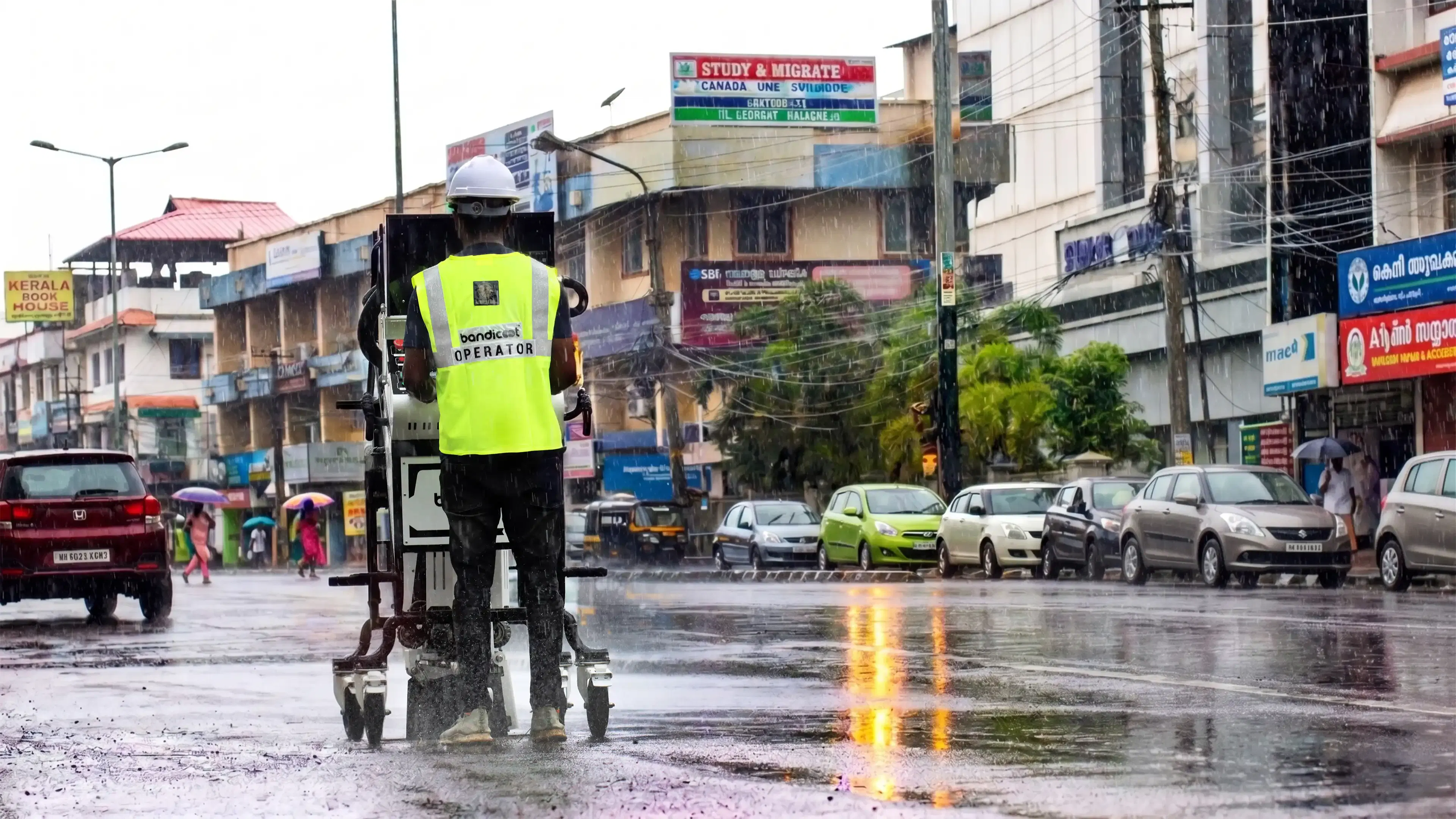
How Robotics Can Prevent Drainage Crises During Monsoon Season
Understanding why urban India floods the way it does requires going underground, quite literally, and examining the state of the infrastructure we rarely think about until it stops working.
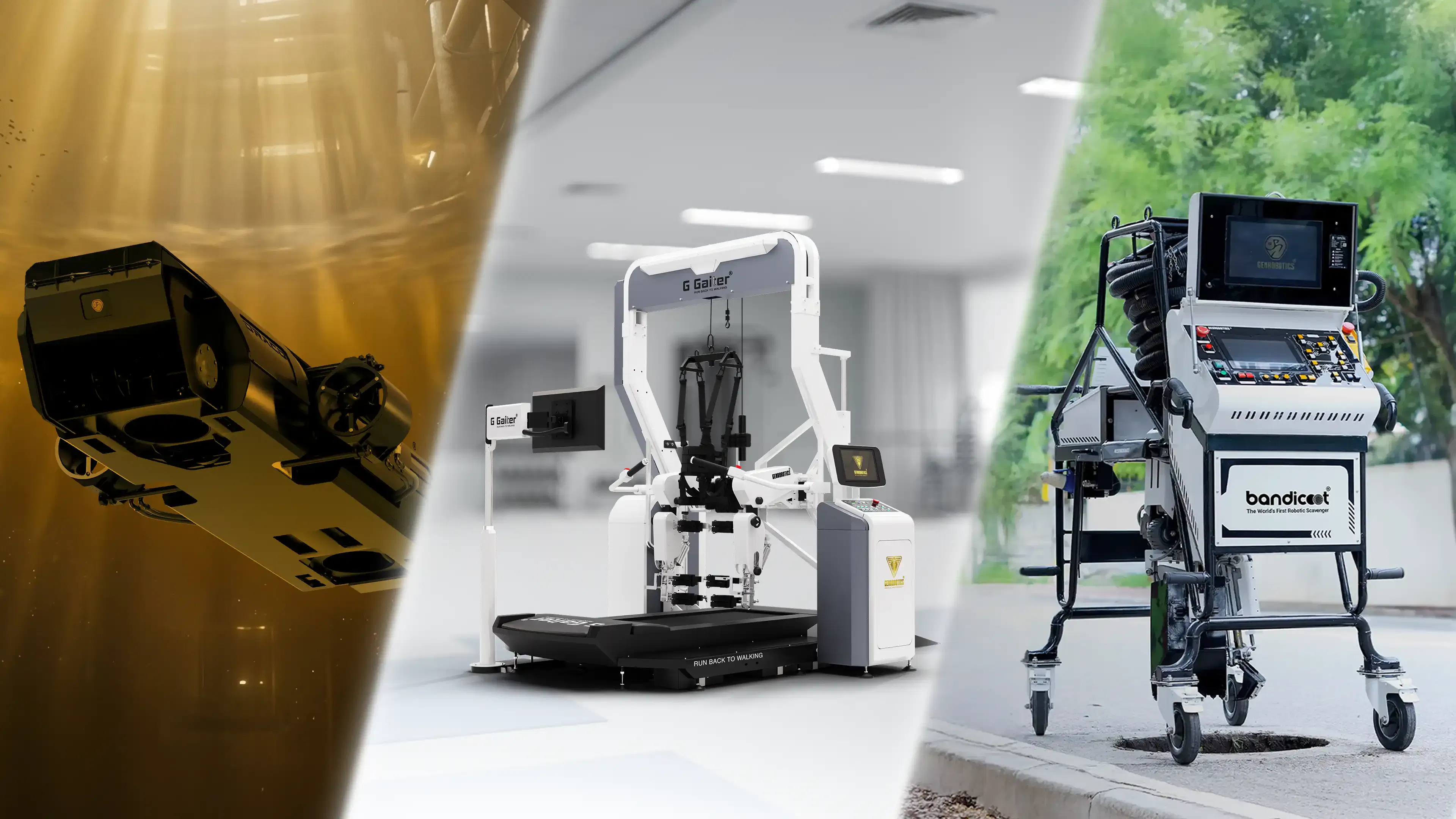
Extreme Environment Robotics in India Explained
When we think about robotics, we often picture controlled environments and predictable systems. But in India, robotics is evolving in places that are anything but controlled.
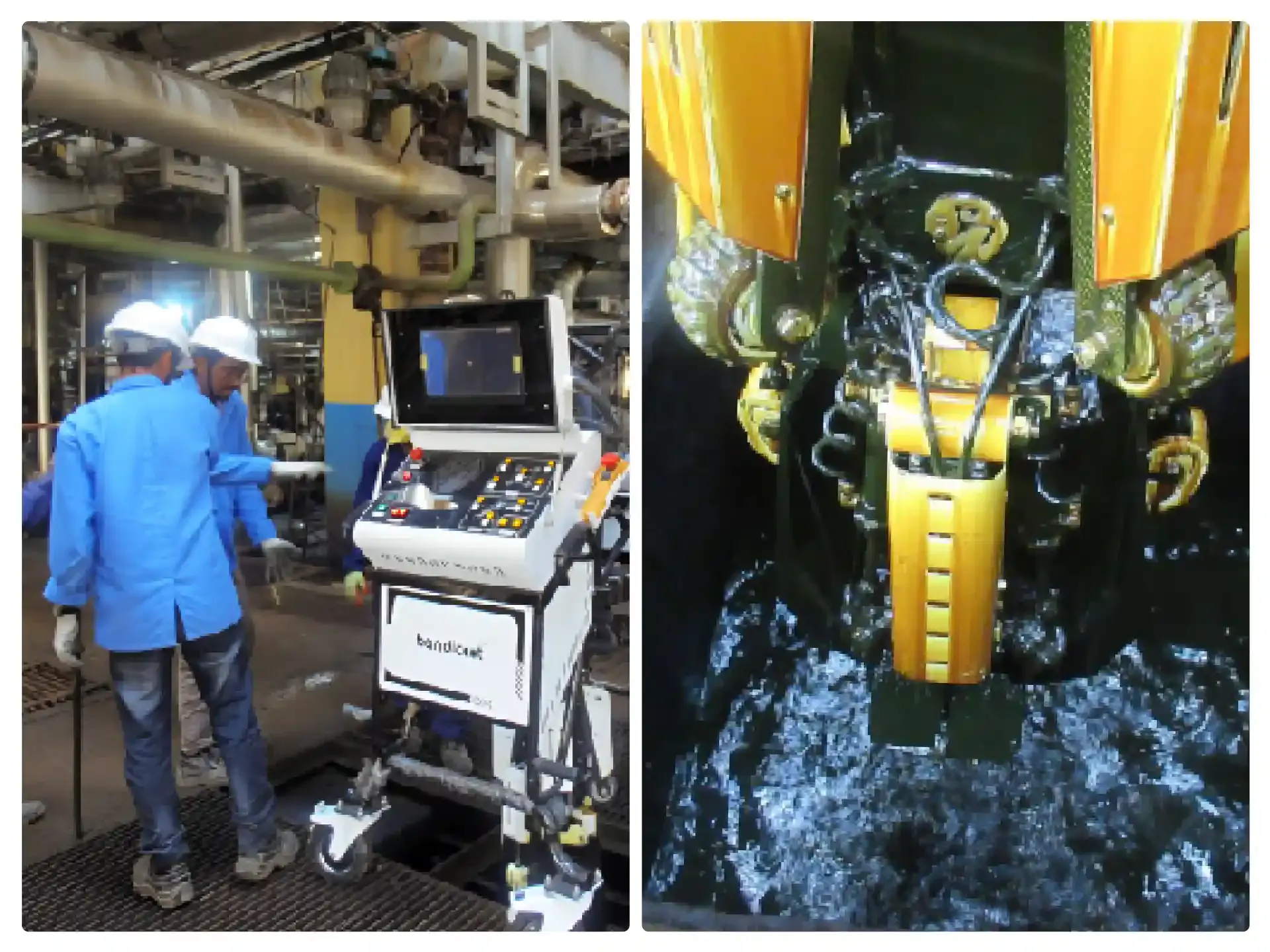
Industrial Robotics Shaping Infrastructure and Safety
Industrial infrastructure across the world is facing unprecedented pressure. Rapid urbanization, aging public assets, climate volatility, and rising safety standards are forcing governments and industries to rethink how infrastructure is managed. One technology is emerging at the center of this transformation: industrial robotics.